

Lessons Learned (?)

Over a week has passed since I decided to step off the race course of Cocodona 250, 190 miles in. I never expected to find myself in a position of contemplating quitting, to the point where I did stop. The days have been long: full of processing, working, and the exhaustion that strikes after a 200-mile week.
I’ve been grateful to receive so many kind and supportive notes from friends, fellow runners, and even people I didn’t know, all of whom were affected by my recap. I’m honored to see more subscribers joining this journey with me, and it reminds me that life is always best lived authentically. If we cannot share our true selves, there is no point.
Still, I’ve been seeking a balance between feeling like I’m complaining, or trying to place blame on a certain moment in the race, and instead looking holistically at what I can take from the miles I did spend out there. I am working towards getting back to running, and trying to ensure I do so sustainably to keep my love for the sport and its people intact.
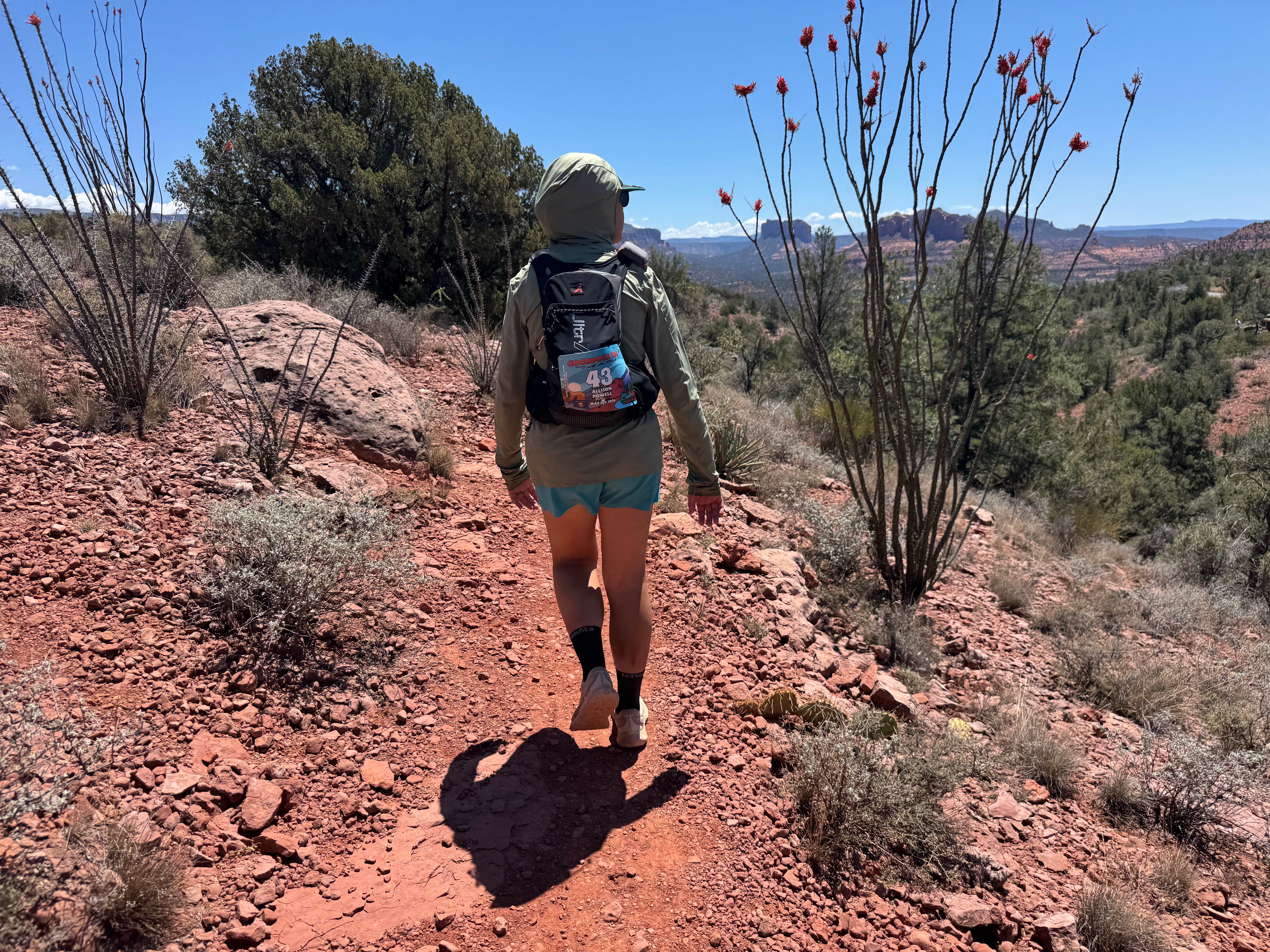
One common refrain I’ve heard is “I wish you didn’t have to learn the hard way.” Well, unfortunately, I do not think there is another way to learn. I understand the sentiment, but the truth is, if it isn’t hard—challenging, difficult, trying— we won’t learn. This is one of the reasons I remain happy with my choice to stop. If I had kept going, I would have repeated the same mistakes of the past and deepened the groove on “pleasing others” rather than making a bold new move and choosing myself.
As my coach asked before I left the last aid station, “What is the emotional damage of stopping? And what is the emotional damage of continuing?” I am as certain today as I was that night that the emotional damage of continuing was markedly higher.
So what did I learn from this? I have the question mark in the title because only time will tell if I can take these lessons to heart and apply them in the future, truly learning from them. I sincerely hope that I can, and that my awareness of that helps too.
I needed a stronger mindset and mental toolkit. I have never before struggled mentally with finishing a race. I have always been able to pivot to grinding it out for a finish, focusing on something positive, or changing up a time goal to keep myself moving. I’ve even joked with friends, “I’m maxed out on mental toughness, I don’t need any more.” Clearly, this is no longer true. With more items vying for my time and attention, I need to make sure I quiet the noise before heading to a big event. I need to honor that long races are hard, no matter what, and be prepared mentally to handle the slowness, pain, and self-judgment with good tools.
I wanted to note somewhere that I was super excited for my Cocodona: The Musical playlist headed into the race. I had to stop myself from listening to it too much beforehand! And yet I left the start line with no headphones. I wanted to save it, but not having the option meant I had no choice but to listen to other runners or get lost in my thoughts, and there was no distraction from my increasingly painful toe. (It was breathtakingly painful, but finally faded around mile 75). Later in the race, I listened to a new-to-me podcast I hated for about 3 hours straight. That is how miserable I was and how unwilling/unable I had become to change things. A mental toolkit must include: good music, good company in podcast or audiobook form, and the ability to access it or change it as needed instantly.
Honestly, I spent too much energy comparing myself to other runners. This is something I have worked on in the past, but I didn’t do so as much heading into this race. I allowed myself to think I could rest on the previous work, and that I was a good enough runner not to stress over being passed by others. I was wrong. In future races, I will remind myself that I am executing my plan, and what others do is not something I can control. I know this, but I needed to live it more.
My crew document needs to be updated. I wanted more flexibility and pivoting, and while I addressed that in our single pre-race meeting, my document still has a lot of “DON’T LET ME” in it. That is on me! I push myself very hard (perhaps harder than anyone else can) so I want a crew space that has more softness. Although I did learn it’s helpful to have pacers push you, setting a pace, vs following me, so that will update too. These are things I could only learn by doing and experiencing different setups. Yes, I want to be in and out of an aid station quickly, but without feeling rushed. A tricky balance!
Fueling better. I was probably a bit underfueled heading into the race, and was certainly underfueled for the first 37 miles. Despite eating what I could, my energy was low from night one, and I found it very challenging to get my legs turning over. I passed into the stage of fueling where I could eat very little at once, but knew I needed more. Eating enough became a challenge, and one that was hard to turn around. Was this the only cause of my low energy? Probably not. Could it be different in future races? Probably. Carrying more options and eating plenty the week before should help.
Hope. I was utterly hopeless at many points during the race, including the last day. While many tried to help me turn it around, I just wasn’t resonating with “it might get better, it can turn around, you don’t know what the next section will hold, you just need a positive mindset” For some reason (fatigue), I couldn’t process and hold onto this sentiment. Post race, I think it might have helped if it were put in terms of hope. “Can you go forward on the hope that it might get better?” Hope seems easier than positivity in those all-is-lost moments on the trail. Reminding myself to hold on to hope is going to be a new mantra (in the new crew document)
Ultimately, there are so many small things: pains, mistakes, choices, and tiny moments, that I am sure there is no one thing that led to the race not being a “success” by conventional standards. Which, in some ways, makes it harder. In others, it keeps the door open for many small lessons and improvements to be made. Could I have done this or that differently? Yes. Would that have changed anything? Who knows. We only get to live in one direction. So the only thing to do is continue the recovery process with grace and apply these lessons to the next event.
Thank you to everyone who has reached out and shared messages of support and encouragement. It means so much to me! We all face different challenges, but we are all sufferers of the human condition, and we are not alone. Thanks for being with me.